
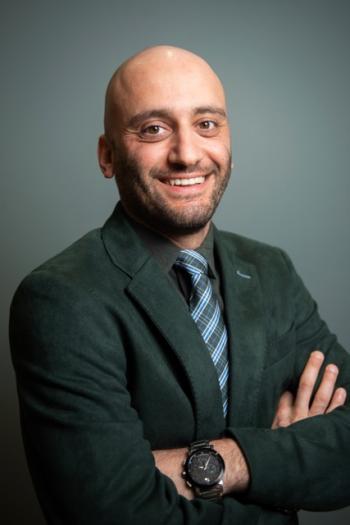
When Professor Mehran Tehrani joined the American Society of Mechanical Engineers in March 2008, he was a first-year graduate student drawn by the prospect of professional community, networking, and affordable student membership. Nearly two decades later, he has been elected to the society's highest elected grade — ASME Fellow — a recognition that places him among roughly 3,300 members out of tens of thousands worldwide.
The Fellow grade is conferred by ASME's Committee of Past Presidents and requires at least ten years of active engineering practice, ten years of corporate ASME membership, and demonstrated significant contributions to the field. Candidates must be nominated and supported by four sponsors, the majority of whom must themselves be ASME members or Fellows — a process designed to ensure only those with genuine, peer-verified impact are elevated.
"It is deeply meaningful because it reflects recognition from my peers that my work has made a real impact. That kind of acknowledgment is both rewarding and humbling."— Professor Mehran Tehrani
Research, Teaching, and Service
Professor Tehrani's research — particularly in composites and additive manufacturing — has been central to the recognition. Over the years, his ASME involvement grew steadily from participation to leadership: chairing sessions, co-organizing technical tracks, serving as a judge at events, and helping organize additive manufacturing topics spanning dozens of papers and presentations each year.
Alongside research, teaching has been a defining part of his professional identity. He has worked to create hands-on learning experiences, bring emerging technologies into the classroom, and develop new courses oriented toward where the field is heading — contributions that reflect the breadth ASME's Fellow evaluation considers.
In His Own Words
On what drove the recognition:
"Research has likely been the most central, especially work that has not only advanced knowledge but also helped shape emerging practices in the composites industry. At the same time, teaching has been a major part of my professional identity. I have worked hard to create hands-on learning experiences, bring emerging technologies into the classroom, and develop new courses that prepare students for where the field is heading."
On the evolution of his ASME service:
"My role has definitely evolved from attendee and author to someone helping shape the technical community. I have chaired sessions, co-organized technical tracks, served as a judge at ASME events, contributed through technical committees, and helped organize additive manufacturing topics that often included dozens of papers and presentations."
On what he hopes his students take from this:
"I hope it shows them the value of contributing to a professional community, not just benefiting from it. Service often happens behind the scenes — reviewing, organizing, mentoring, volunteering — and it is an essential part of how a field advances. I hope they see that professional engagement is not only a way to give back, but also a way to build networks, learn from others, and grow as scholars and leaders."
Professor Tehrani is quick to situate the award within a web of collaboration, expressing particular gratitude to his past and current students and postdocs, whose creativity and dedication he describes as central to everything accomplished. He also acknowledges his PhD advisor, his formal and informal mentors, and the colleagues who nominated and supported him through the process.
For those beginning their own journeys — graduate students joining for the first time, showing up to their first conference — the message from Professor Tehrani's career is patient and clear: start contributing early, stay involved, and let the work speak over time.